Thermal Imaging Home Inspection in Calgary
Using a professional-grade thermal imaging camera, I can see what the naked eye cannot. Thermal imaging reveals hidden moisture intrusion, missing or inadequate insulation, electrical hotspots, and energy loss areas. Thermal imaging is included with every home inspection at no extra charge.
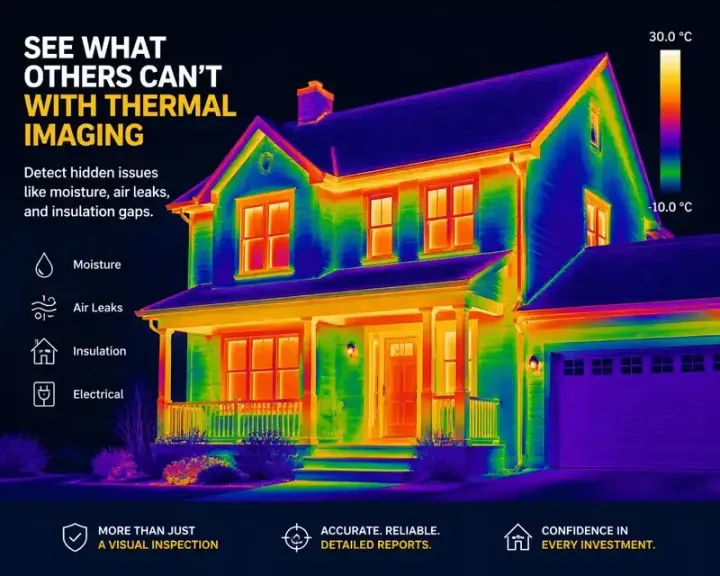
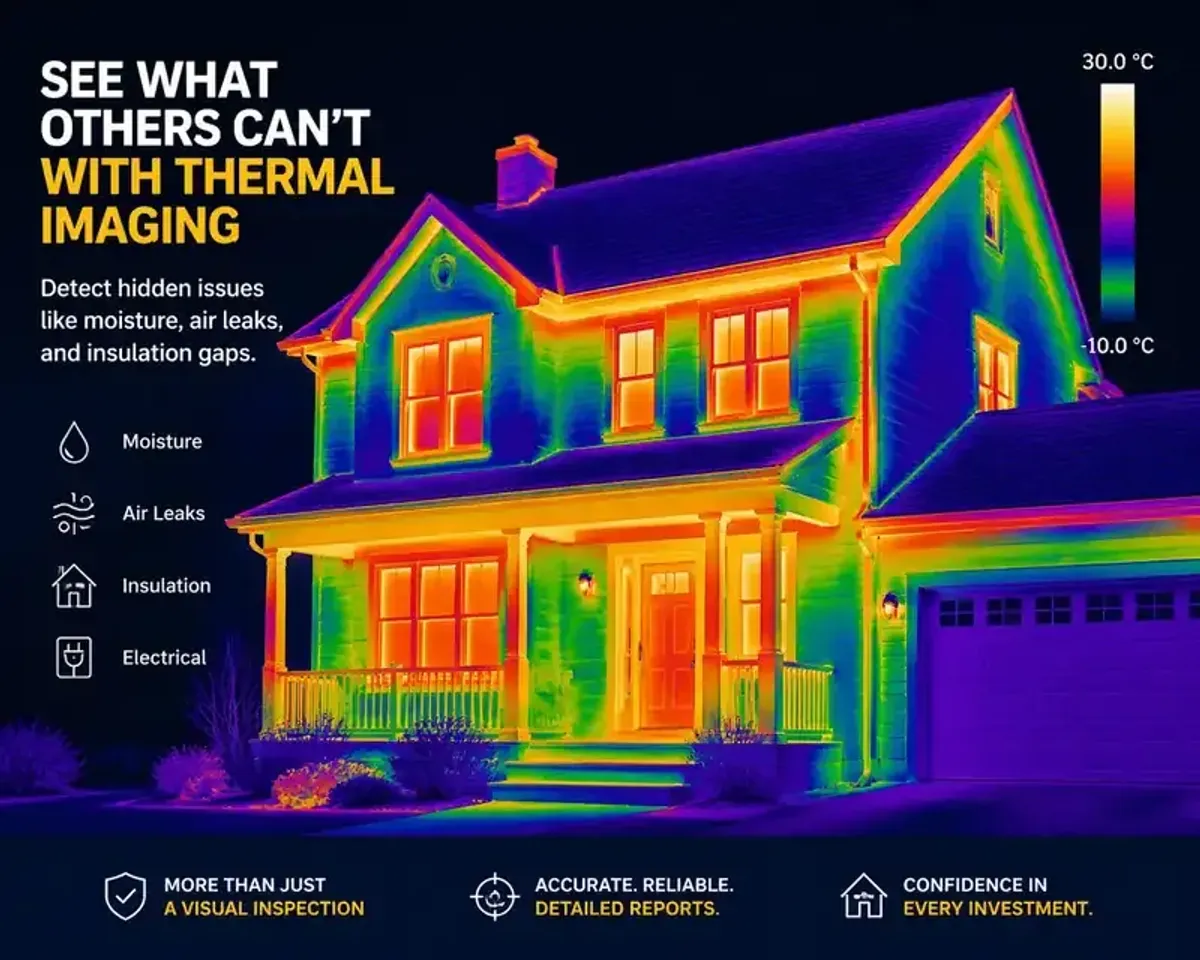
Not every problem in a home is something you can see with your eyes. Moisture hiding behind walls, missing insulation in a ceiling cavity, an overheating electrical connection. These things can go completely undetected during a standard visual inspection. That's where my infrared thermal camera comes in. It reveals temperature differences across surfaces, exposing hidden issues that would otherwise stay out of sight until they cause real damage.
What Thermal Imaging Detects
To be clear, infrared cameras don't actually see through walls. What they do is detect surface temperature variations that point to underlying problems. A cold spot on an interior wall during winter might reveal missing insulation or air sneaking in from outside. A warm, damp patch on a ceiling could mean there's a roof leak or plumbing issue above. Electrical panels and wiring that show abnormal heat signatures may point to overloaded circuits or loose connections that pose a fire risk. I also use thermal imaging to trace radiant heating systems, find HVAC duct leaks, and pinpoint areas of significant energy loss around windows, doors, and the building envelope.
Why Thermal Imaging Matters in Calgary
Calgary's climate actually makes thermal imaging especially effective. When outside temperatures drop well below zero, which happens regularly from November through March, the temperature difference between the heated interior and cold exterior is dramatic. That large difference makes it much easier for the infrared camera to pick up insulation gaps, air leaks, and moisture intrusion. Winter is actually the ideal season for thermal scanning because problems that are invisible in mild weather become clearly defined when it's cold. If your home has unexplained cold spots, ice damming on the roof, or energy bills that seem too high, thermal imaging can find the root cause.
Thermal imaging is included with every home inspection at no extra charge. Each scan includes annotated thermal images in your report, with clear explanations of what the temperature patterns mean and my recommended next steps. Whether you're a homebuyer wanting the deepest possible insight into a property, a homeowner investigating a specific concern, or a property manager looking to cut energy costs, thermal imaging adds a powerful layer of information that goes well beyond what the eye can see.
What's Included
- Full property thermal scan
- Moisture intrusion detection
- Insulation gap identification
- Electrical hotspot detection
- Energy loss area mapping
- Thermal images included in report
Ideal For
- Buyers wanting a deeper look at a property
- Homeowners investigating energy loss
- Anyone dealing with suspected moisture issues
Frequently Asked About This Service
Is thermal imaging really free?
What does thermal imaging actually see?
Does thermal imaging see through walls?
When is thermal imaging most effective?
Ready to get started? I'd love to help.
Whether you are buying your first home or your fifth, I will make sure you know exactly what you are getting. Let's set up a time to talk.